
Civilization Against The Deadlands
The Calamitous BobThis flow deepens the novel’s contrast between fragile civilization and the ecological, political, and moral consequences of abandonment.
increasing Bearing strength in each event
 decreasing
Bearing strength in each eventdecreasingThe Fortress Economy
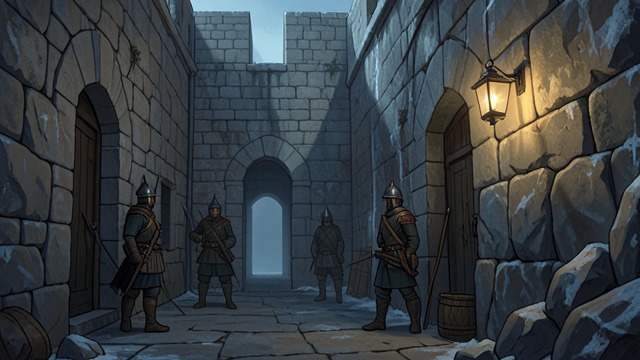
The Fortress Economy
Fort Sky survives through rationing, patrols, warning fires, and the labor of soldiers who know that replacement may never come. Its poverty is not accidental; it is the cost of defending a worthless frontier.
Resources And Risk
The garrison lacks medicine, enchanted equipment, fuel, and horses. Every object becomes strategically important, and every casualty reduces the fort’s future capacity.
Civilization’s Edge
The fort represents organized society at its thinnest. Its walls are meaningful only because people maintain them, and they fail quickly when the surrounding institutions stop responding.
The Deadlands Economy
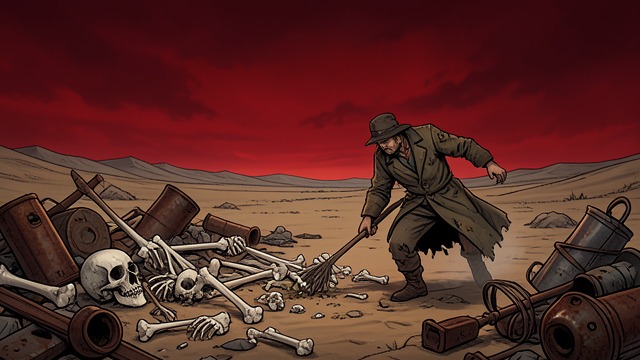
The Deadlands Economy
The Deadlands are not empty in a simple sense. They contain abandoned caches, monster parts, undead bounties, ruined currencies, and risks that support an entire frontier economy.
Wealth Among Ruins
Viviane Saint-Lys acquires valuable coins, bones, equipment, and magical objects from the dead. The region’s destruction produces resources even as it kills those who seek them.
Organized Exploitation
The Church of Neriad pays for Revenant heads because extermination is cheaper than invasion. The Deadlands are therefore both a disaster zone and an economic system built around managing disaster.
The Green Boundary
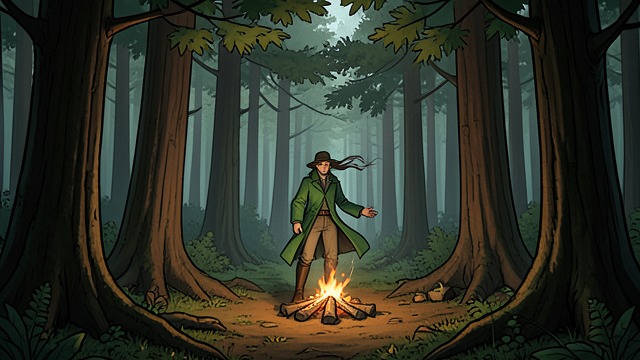
The Green Boundary
Viviane Saint-Lys sees living forest beyond the grey plains and understands that geography has divided death from ordinary society. The boundary is physical, ecological, and political.
Life As A Shock
Trees, farms, animals, smoke, and wind affect Viviane more strongly than monuments ever did. Their ordinary existence proves that the world is larger than the catastrophe.
A Fragile Border
The living region remains vulnerable to undead migration, monsters, and war. Civilization survives not because danger has disappeared, but because it is held at a distance by institutions and people.
The Kazar Tree
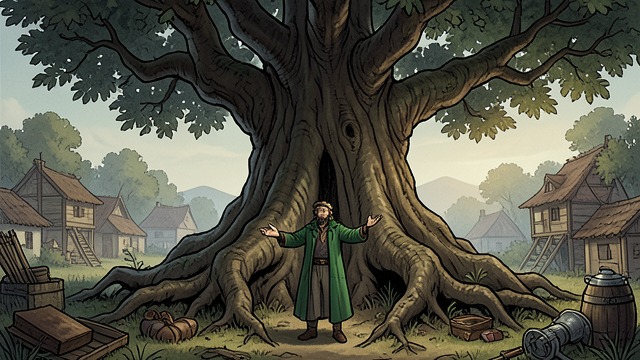
The Kazar Tree
Viviane Saint-Lys encounters the immense tree at the center of Kazar, whose presence purifies the air and anchors the city’s origin story. The tree provides a natural counterpoint to Harrak’s artificial grandeur.
Protection Without Empire
The tree does not rule, conquer, or demand tribute. Its benefit is environmental and continuous, allowing a settlement to grow around it.
A Different Model
Kazar suggests that power can sustain life without becoming militarized. Viviane’s attraction to the tree hints at a future in which strength might be used to create refuge rather than dominion.
The Cost Of Neglect
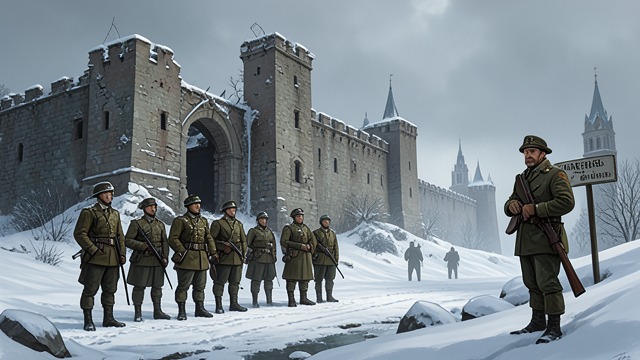
The Cost Of Neglect
The fall of Fort Sky reveals what happens when civilization treats frontier defenders as replaceable. The garrison performs its duty, but the system does not provide enough support to make survival likely.
Institutional Abandonment
Warning fires, distant churches, and scheduled replacements cannot compensate for delayed information and inadequate equipment. The fort is expected to hold until it becomes impossible.
A Broader Pattern
The same neglect appears in the Deadlands, in the treatment of Marruk, and in the empire’s refusal to understand its own catastrophe. The novel connects personal abandonment with political failure.
At Fort Sky
During travel toward Kazar
Approaching the edge of the Deadlands
First morning after arrival
After the Siege of Fort Sky
